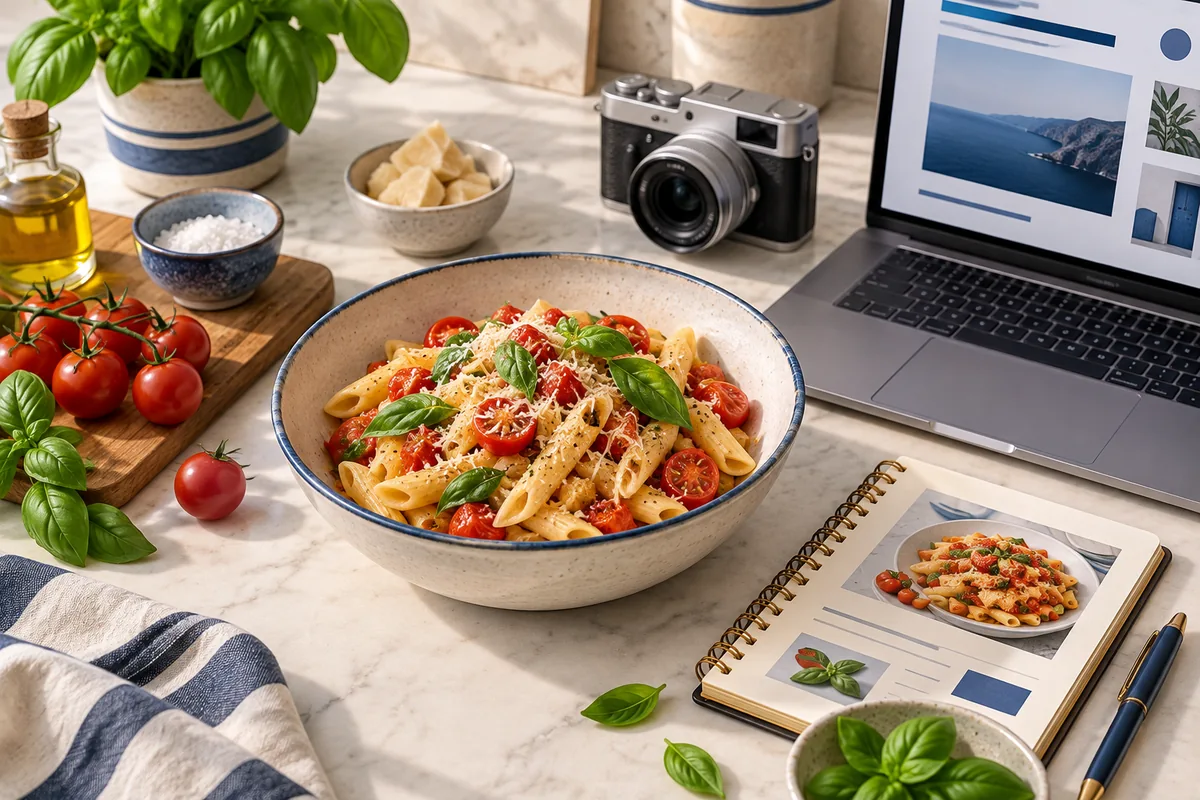
Get Your Brand Featured on High‑DA Food Blogs
Place editorial-quality content on real food and culinary niche websites with genuine audiences. We vet every publisher for domain authority, organic traffic, and topical relevance before we ever pitch your link.
From recipe blogs and nutrition platforms to food sustainability journals — our guest posting service covers the full food niche so your backlinks actually move rankings.
What You Get With Every Order
- Hand-curated food niche publisher
- DA 30–80+ site options
- Original 800–1500 word article
- 1–2 do-follow contextual links
- Editorial review before publish
- Live URL delivered within 7–14 days
- Permanent placement guarantee
- Spam score <3% on every domain
Quick Answer — What Is a Food Guest Post?
A food guest post is a professionally written article — covering recipes, nutrition, culinary culture, food sustainability, or cooking technique — that is published on an established food blog or culinary website with a contextual backlink to your site. The goal is to earn domain authority, referral traffic, and topical credibility in Google’s eyes by being associated with trusted food publishers.
For brands in the food, beverage, supplement, kitchen equipment, recipe app, or restaurant space, food guest posts are one of the most efficient ways to build niche-relevant backlinks at scale. Unlike generic link-building, niche placements signal to search engines that your site belongs in the food conversation — which is precisely why topical authority matters so much in 2025 and beyond.
Our health guest post and food services are designed for exactly this outcome: links that look natural, land on real sites, and hold their value long-term.
Food Niche Links Are Different — Here’s Why
Not all backlinks carry equal weight. A food site linking to your food brand is a far stronger relevance signal than a generic DA60 site with no topical connection.
Topical Authority Signals
Google’s entity-based ranking model rewards sites that earn links from topically relevant publishers. A recipe blog linking to your meal-kit service is more valuable than a random tech blog with the same DA score.
Real Referral Traffic
Food blogs attract dedicated readers who actually click through to recommended products, services, and recipes. Quality placements drive measurable referral sessions — not just link equity.
Long-Term Link Stability
Editorial placements on established culinary sites stay live. We guarantee permanent placement and verify each publisher manually to avoid churn, site sales, or content removal.
Editorial-Quality Content
Our writers understand food culture, nutritional nuance, and recipe terminology. Every article reads like it belongs on the site — because we write for the audience, not just the algorithm.
Diverse Anchor Text Profiles
We build natural, varied anchor text across placements — mixing brand, partial-match, and generic anchors to keep your link profile clean and penalty-resistant over time.
Transparent Reporting
Every delivery includes a live URL, domain metrics screenshot, and placement confirmation. No vague reports. No mystery links. Just clear documentation you can share with clients or your team.
Why Most Food Link-Building Campaigns Fail
Most food brands spend budget on links that never move the needle. Here’s why — and how we avoid each mistake.
Wrong Niche Publishers
Buying a link on a general lifestyle blog that also covers DIY and celebrity news adds almost no topical relevance for a food brand. Search engines evaluate the semantic neighborhood of your link — not just the DA number.
Thin, AI-Spun Content
Many cheap food guest post providers submit low-effort articles that editors reject or flag. Even when published, thin content earns no social shares, no clicks, and sends a low-quality signal to Google about your site.
Undisclosed PBNs and Link Farms
Private blog networks masquerading as food sites are common in the paid guest post market. These links provide a short spike and then devalue — or worse, trigger a manual penalty review on your domain.
Over-Optimized Anchor Text
Aggressive exact-match anchor text across multiple food placements is a common footprint. We follow natural anchor distribution guidelines on every campaign — brand, URL, partial-match, and informational anchors.
No Vetting of Publisher Metrics
DA alone is not a quality signal. We check organic traffic, referring domain growth trajectory, spam score, content freshness, and audience engagement before approving any publisher in our food niche inventory.
Slow Turnaround and Zero Accountability
Many services take 30–60 days with no communication. We commit to a 7–14 day delivery window with status updates, and every order comes with a live URL or your money back.
Our Food Guest Post Service — Fully Explained
We don’t just connect you with publishers. We own the full process from content creation to live delivery.
Our food guest post service is built on a curated publisher inventory that spans recipe blogs, nutrition and wellness sites, food sustainability platforms, restaurant industry publications, kitchen and cookware blogs, and cultural food media. Every domain in our inventory passes a 12-point vetting process before we ever pitch content to it.
When you order a food placement, you choose your target DA range, preferred niche sub-category (plant-based, global cuisine, food business, nutrition science, etc.), and link destination. We handle publisher outreach, article writing, editorial approval, and delivery — all within a defined timeline. This is not a marketplace model where quality is inconsistent; this is a managed service with editorial standards at every step.
Our service is particularly well-suited for brands that want to complement their blogger outreach efforts with guaranteed placements, or for SEO agencies that need a reliable food niche fulfillment partner. We also offer white-label guest posting for agencies managing food brand clients.
Who Gets the Most Value from Food Guest Posts?
Food & Beverage Brands
CPG brands, beverage companies, specialty food retailers, and DTC food startups building organic search visibility and brand awareness in competitive food categories.
Recipe & Nutrition Apps
Platforms in the meal-planning, recipe discovery, or nutrition tracking space needing topical backlinks to rank for competitive informational and commercial food keywords.
Kitchen Equipment Brands
Cookware, appliance, and kitchen gadget brands that benefit from links on recipe sites where audiences actively research product recommendations before purchase.
Restaurants & Hospitality
Restaurant chains, food tourism operators, catering businesses, and hospitality groups building local and national search presence through culinary content placements.
What Every Food Guest Post Placement Includes
Publisher Selection Report
Before writing a word, we send you the proposed publisher with full metrics — DA, DR, monthly organic traffic, spam score, and niche relevance summary — for your approval.
Original Article (800–1500 words)
Written by a food-specialist writer, every article includes a compelling introduction, substantive body content, proper heading structure, and a natural editorial link placement. No AI slop, no spinning.
Contextual Do-Follow Link
Your link is placed in the body of the article in a contextually relevant sentence — not in the author bio, sidebar, or footer. This is the only link placement that passes genuine ranking authority.
Editorial Review Process
Each article undergoes grammar, fact, and tone checking before submission. The publisher also performs their own editorial review — meaning the content meets two independent quality gates.
Live URL Delivery
You receive the live URL of your published article within the agreed delivery window. We also provide a screenshot of the page as additional documentation for your records.
Permanent Placement Guarantee
We only work with publishers who commit to keeping content live. If a placement is removed within 6 months for any reason beyond editorial policy, we replace it at no additional charge.
How We Vet Every Food Publisher
Our 12-point publisher audit ensures that every food niche site in our inventory meets the minimum bar for a clean, authoritative placement.
Domain Authority
We check Moz DA and Ahrefs DR independently. Sites must meet the DA tier you select — we don’t pad inventory with borderline domains.
Organic Traffic Verification
We use Semrush and Ahrefs to verify real monthly organic visitors. Domains with inflated DA but near-zero traffic are rejected immediately.
Spam Score Check
Moz Spam Score must be under 3%. Sites with toxic link profiles, sudden traffic spikes, or link farm histories are excluded from our inventory.
Niche Relevance Audit
At least 70% of published content on the domain must be genuinely food-related. Mixed-niche PBN-style sites with thin food sections are not accepted.
Content Freshness
Publishers must have posted new content within the last 60 days. Stale, abandoned sites offer no real audience and suggest editorial instability.
Social Engagement Check
We review social sharing patterns and comment activity as proxies for real audience engagement. Ghost sites with no engagement are removed from inventory.
The Food Guest Post Process — Step by Step
From your first brief to a live backlink — here’s exactly what happens after you place an order.
Submit Your Brief
Tell us your target URL, preferred anchor text options, niche sub-category (recipe, nutrition, food business, etc.), and DA tier. The briefing form takes under 5 minutes.
Publisher Matching
Within 48 hours, we identify 1–3 publisher options from our vetted food niche inventory that match your niche and DA requirements. You approve before any writing begins.
Article Creation
Our food writer crafts a genuine, research-backed article tailored to the publisher’s audience and editorial style. The article undergoes an internal quality review before submission.
Editorial Submission
We submit directly to the publisher’s editorial contact. We manage all follow-up communication — you never have to chase anyone. Most placements are approved within 3–5 business days.
Live URL Delivery
Once published, you receive the full live URL, domain metrics summary, and a screenshot. Typical total turnaround is 7–14 days from order confirmation.
Post-Delivery Support
We monitor placement status for the first 6 months and replace any removed links at no cost. For ongoing campaigns, we provide monthly live-URL tracking reports.
Food Sub-Niches We Cover
Our publisher inventory spans the full depth of the food content ecosystem — not just recipe blogs.
Recipe & Cooking
General recipe blogs, cuisine-specific sites (Italian, Asian, Mexican, etc.), cooking technique guides, home baker communities, and seasonal recipe platforms.
Nutrition & Health Food
Registered dietitian blogs, sports nutrition sites, macro and calorie tracking resources, and evidence-based nutrition platforms. Pairs well with our health guest post service.
Plant-Based & Vegan
Vegan recipe sites, plant-forward lifestyle blogs, dairy-free and gluten-free cooking communities, and sustainable eating platforms with engaged audiences.
Food Business & Industry
Restaurant industry news, food entrepreneurship blogs, catering and hospitality trade publications, and food startup media — for B2B food brands.
Food Sustainability
Agricultural sustainability, food waste reduction, local sourcing, and ethical food system blogs — a fast-growing content niche with strong DA publishers.
Food Travel & Culture
Culinary travel blogs, regional food guides, street food culture sites, and food festival communities. Works well combined with our travel guest post service for food tourism brands.
What Makes a Food Backlink Actually Valuable?
Not all food guest post placements are created equal. The gap between a link that lifts rankings and a link that does nothing — or worse, harms your profile — comes down to four factors that most services ignore.
1. Do-Follow vs. No-Follow Attribution. We only place do-follow links in the body of the article. Bio links and no-follow links are excluded from our deliverables by default. Body-embedded do-follow links are the only type that meaningfully passes PageRank.
2. Publisher Traffic Reality. A DA50 food site with 200 monthly organic visits is almost worthless for link building. Our minimum traffic threshold is 1,000 monthly organic visitors — verified via third-party tools — on every standard placement. Explore our high DA guest post site standards to understand our full vetting criteria.
3. Content Surrounding the Link. Google evaluates the semantic context around each link. We ensure your link appears in a paragraph that discusses a genuinely related topic — never dropped into an unrelated section to satisfy a word count.
4. Publisher Index and Cache Status. Every publisher we use must have active Google indexing and a fresh cache date. Deindexed or penalized sites are removed from our inventory immediately. Learn more about our guest post link-building standards for full transparency.
For a deeper comparison of how we evaluate sites, see our breakdown of high DA vs. niche-relevant guest post sites — it explains why topical fit often outperforms raw DA in food SEO campaigns.
High DA Guest Post vs. The Alternatives
| Feature | High DA Guest Post | Freelance Outreach | Guest Post Marketplaces | PBN Services |
|---|---|---|---|---|
| Publisher Vetting | 12-Point Audit | Manual, Inconsistent | DA Only | None |
| Content Quality | Food Specialist Writers | Variable | Variable | Often Thin |
| Delivery Time | 7–14 Days | 21–60 Days | 10–21 Days | 24–72 Hours |
| Spam Risk | Very Low | Low–Medium | Medium | High |
| White-Label Reporting | Included | Not Available | Rare | Rare |
| Permanent Guarantee | 6-Month Guarantee | No Guarantee | Some Providers | No Guarantee |
| Food Niche Depth | 6 Sub-Niches | Depends on Freelancer | General Only | Thin Niche Coverage |
How a Nutrition Brand Grew Organic Traffic With Food Guest Posts
The Situation
A direct-to-consumer supplement brand in the plant-based protein space had strong product reviews and a well-designed site, but was stuck on page 3 for their core commercial keywords. Their backlink profile was thin — mostly homepage links from press releases and a handful of generic lifestyle blogs.
They needed links from food-specific, health-adjacent publishers to build the topical authority signals that generic links could not provide.
The Approach
Over a 90-day campaign, we placed 12 food guest posts across three sub-niches: plant-based recipe blogs, sports nutrition platforms, and food sustainability sites. Each article targeted a different long-tail topic related to plant-based protein — from cooking guides to ingredient comparisons.
Anchor text was distributed across brand names, partial-match phrases, and informational terms to maintain a natural link profile throughout the campaign.
Results at 90 Days
- Target keyword positions (avg.)Page 3 → Page 1
- Organic sessions (monthly)+68%
- Referring domains gained+12 food niche RDs
- Referral clicks from placements340+ in 90 days
Why It Worked
Every placement was on a real food blog with genuine readership. The content was detailed enough to earn editorial approval without revision. And because anchor text was varied and the articles were genuinely informative, there was no pattern that could attract algorithmic scrutiny.
For a full breakdown of how we measure success, read our guide on guest post ROI and ranking expectations.
Food Guest Post Pricing — What to Expect
Pricing scales with domain authority tier, organic traffic level, and niche specificity. Here’s a transparent overview of typical ranges.
Standard
DA 20–35 food blogs with real organic traffic and genuine editorial standards.
- DA Range: 20–35
- Traffic: 1K–5K/mo
- 800–1000 word article
- 1 do-follow contextual link
- Delivery: 10–14 days
Premium Most Popular
Established food media sites with strong organic presence and loyal audiences.
- DA Range: 35–55
- Traffic: 5K–30K/mo
- 1000–1300 word article
- 1–2 do-follow links
- Delivery: 7–12 days
Authority
High-authority food publications with large audiences and significant domain metrics.
- DA Range: 55–80+
- Traffic: 30K+/mo
- 1200–1500 word article
- 1–2 do-follow links
- Delivery: 10–16 days
Volume discounts available for 5+ placements. For full pricing details, visit our guest post cost page.
How We Keep Your Site Safe
White-hat guest posting is one of the safest link-building strategies available — but it must be executed correctly. Our risk reduction framework is built around four commitments.
We vary publishers, anchor text, link placement position, and content topics across every batch of food placements. We never repeat the same publisher for the same client within a 6-month window, and we never use templated article structures that create detectable patterns.
Your links will span different domain registrars, hosting providers, CMS platforms, geographic server locations, and food sub-niches. This natural diversity is what a genuine link acquisition profile looks like — and it’s exactly what algorithmic spam detection is looking for.
We follow industry best practices for guest post link building anchor distribution — typically no more than 20–30% exact-match anchors across a campaign, with the balance split between brand, URL, partial-match, and generic anchors. We recommend the anchor strategy to you before each batch.
We do not use PBNs, link exchanges, footer links, or sponsored content that is deceptively marked as editorial. Every placement is a genuine editorial guest post. Our approach aligns with Google’s quality guidelines for link acquisition — the same standard our white-hat vs. black-hat analysis covers in detail.
Frequently Asked Questions About Food Guest Posts
Our food publisher inventory includes recipe blogs, culinary lifestyle sites, nutrition and wellness platforms, vegan and plant-based cooking communities, food sustainability journals, restaurant industry publications, and food travel media. We do not include general lifestyle blogs that occasionally post a recipe — publishers must derive at least 70% of their content from food-related topics.
Yes. If you have an in-house content team or prefer to write the article yourself, you can submit your draft with the order. We review it for publisher compatibility, suggest any necessary edits for editorial approval, and handle the outreach and placement. Many of our guest posting agency clients use this workflow for brand voice consistency.
Standard placements are delivered within 7–14 calendar days from order confirmation. Authority-tier placements with larger publishers may take up to 16 days due to longer editorial queues. We provide a status update at each stage — publisher approval, article submission, and live URL confirmation.
Yes. We work with a large number of SEO agencies and offer volume pricing for 5+ monthly placements, dedicated account management, and white-label reporting in your agency’s branding. Contact us to discuss custom campaign structures for food brand portfolios.
Yes — when done correctly. Google’s Helpful Content and link spam updates have penalized low-quality, mass-produced guest post campaigns, but they have reinforced the value of genuine editorial placements on authoritative, topically relevant sites. A food guest post on a real recipe blog with an engaged audience is a stronger signal than ever because fewer such placements exist after the market self-corrected. The key is publisher quality and content authenticity, not volume alone.
We offer a 6-month replacement guarantee on all food guest post placements. If your link is removed within that window for reasons outside a publisher’s stated editorial policy change, we re-place it on a comparable or higher-tier publisher at no additional cost. We track all live URLs and proactively notify you if any placement status changes.
Marketplaces are self-serve platforms where quality is inconsistent and publisher vetting is minimal. Our service is fully managed — we select the publisher, write the article, handle editorial negotiations, and deliver the live URL. We also personally guarantee placement quality through our 12-point publisher audit, which no automated marketplace can replicate.
Yes, and this is underappreciated. A well-placed article on a food blog with 15,000 monthly readers can send 50–200 direct referral clicks in the weeks after publication. This referral traffic often converts at higher rates than cold organic traffic because readers arrive pre-qualified by the culinary context of the article. Our guest post ROI guide explores this in more detail.
Get Your Food Brand on High-Authority Culinary Sites
Tell us your target URL, niche, and DA preference. We’ll match you with the right food publishers, write the article, and deliver a live backlink — typically within 14 days.
No long-term contracts. Permanent placement guarantee. Live URL delivered or money back.